
Co, John Simon
@johnsimon.co
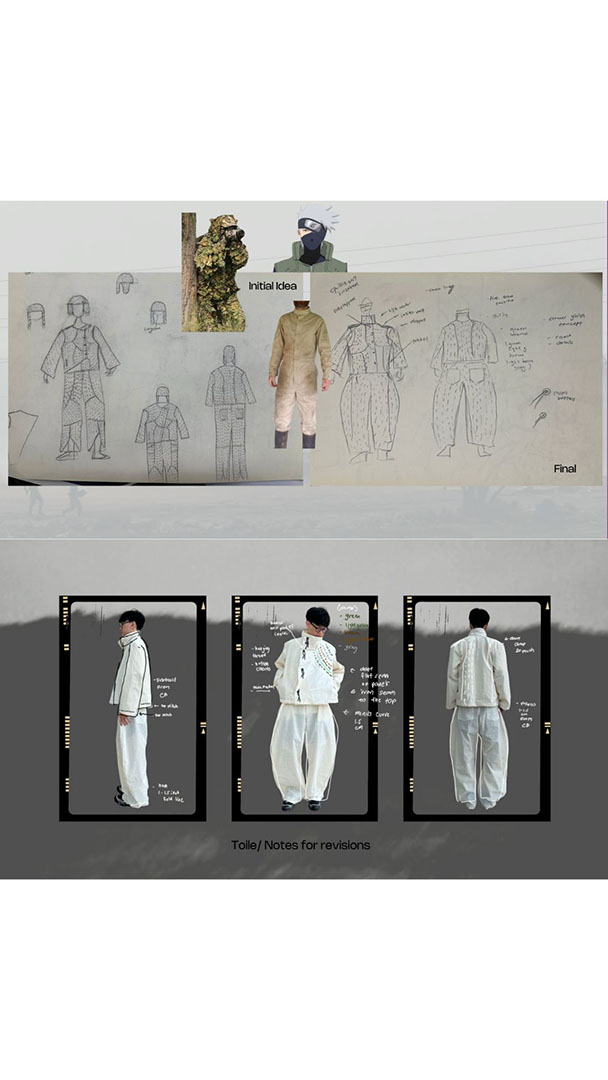
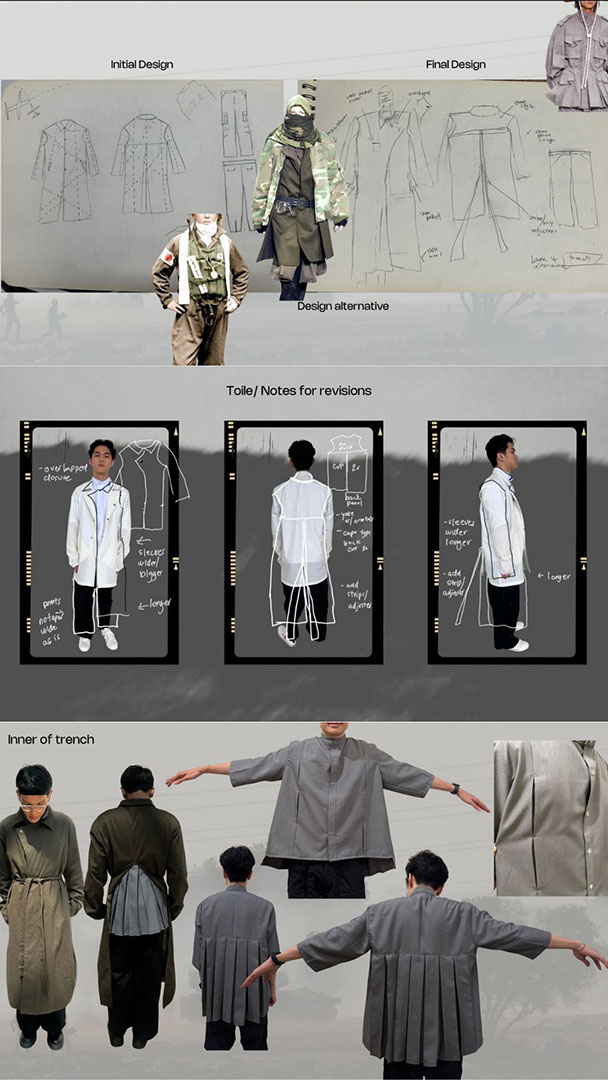
“The Treaty”: The inspiration for this collection stems from personal experiences: my proximity to the Philippine Army (PSG) while studying beside Malacañang Palace; my late father’s unfulfilled ambition to join the PNPA or the ARMY, and observations of everyday Filipinos in the streets of Divisoria wearing camouflage-print clothing. This fascination with the utility and fashion influence of military wear led to a collection that reimagines these iconic silhouettes for modern wearability and functionality.
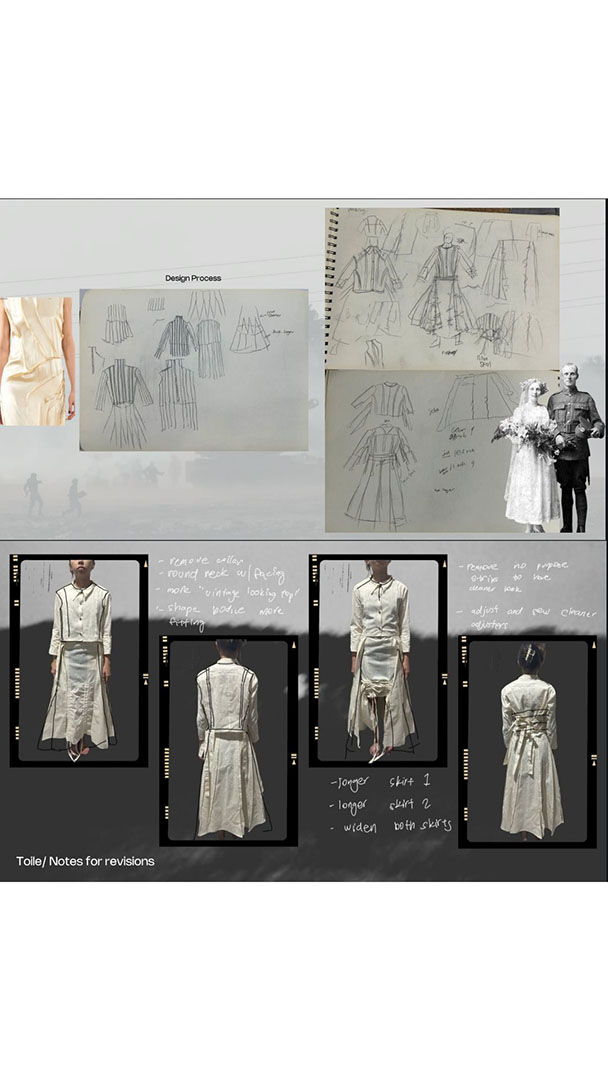
Drawing narrative inspiration from the film Atonement, this ready-to-wear collection explores a wartime love story with both happy and tragic possibilities. It tells the story of a soldier’s resilience and yearning for homecoming, using World War-era uniforms from diverse countries and eras as a starting point. Experimental designs prioritize wearability, combining fashion and function to tell a powerful story. Techniques like pleating, embroidery, layering, and paneling create a visual narrative of hardship and hope, reflecting the soldier’s unwavering commitment to his marriage promise.
John Simon Co, known as John Essi, is a designer who translates stories and experiences into fashion. He tells compelling narratives through clothing. Growing up surrounded by sports, movies, and music, Essi now channels these influences into his artistic expression. Drawing inspiration from around the world, he crafts unique silhouettes for a diverse range of styles, including streetwear, avant-garde, formal wear, gowns, and activewear. Proficient in embroidery, appliqué, and dyeing techniques, Essi brings these narratives to life. He uses embroidery manipulation to showcase movement and artwork through lines and images, blending traditional silhouettes with a contemporary approach.
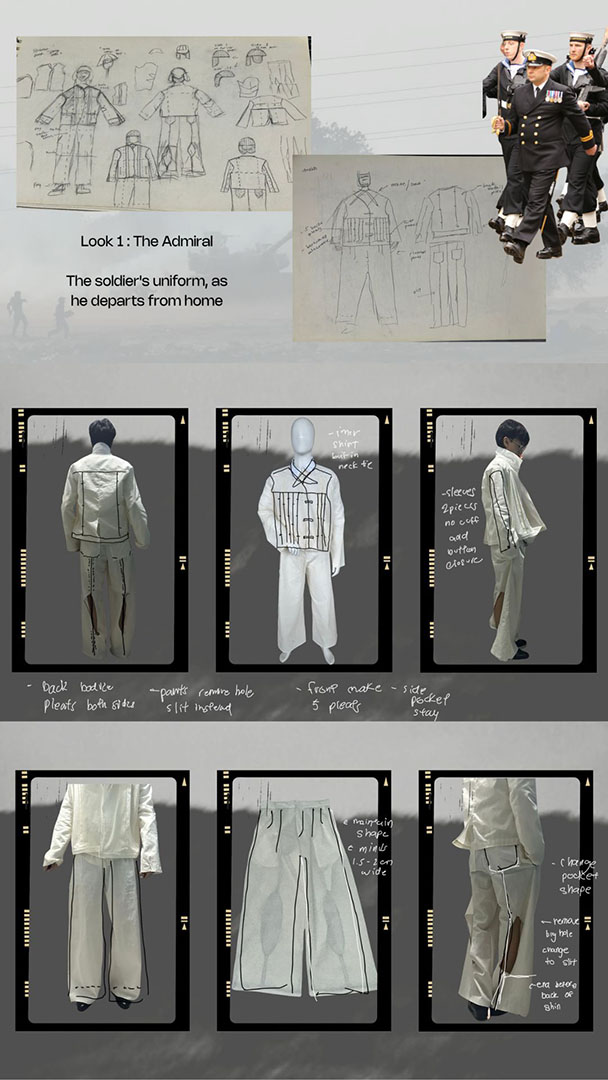
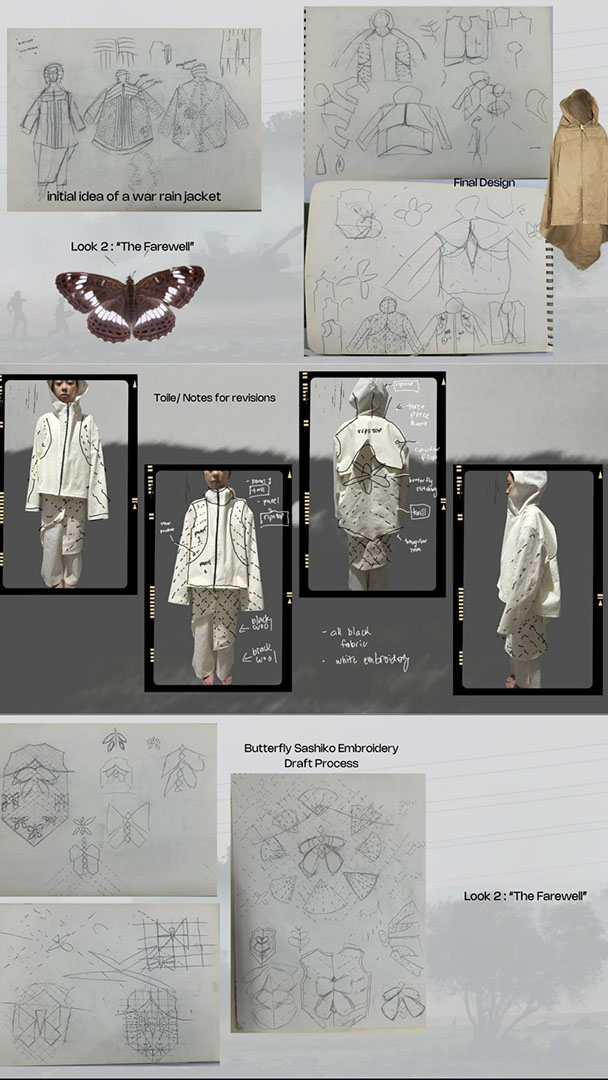
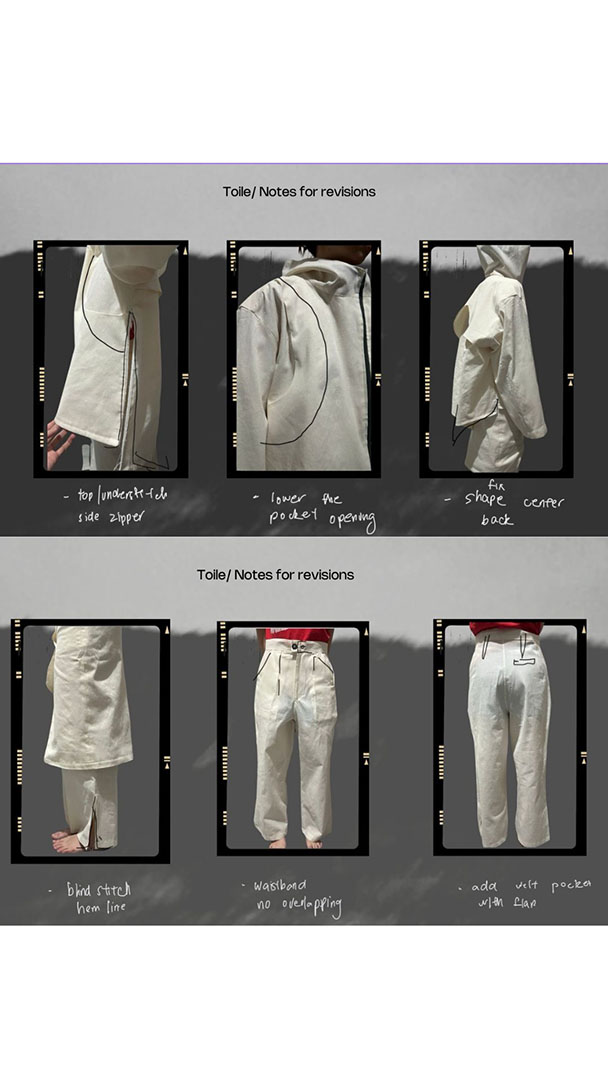
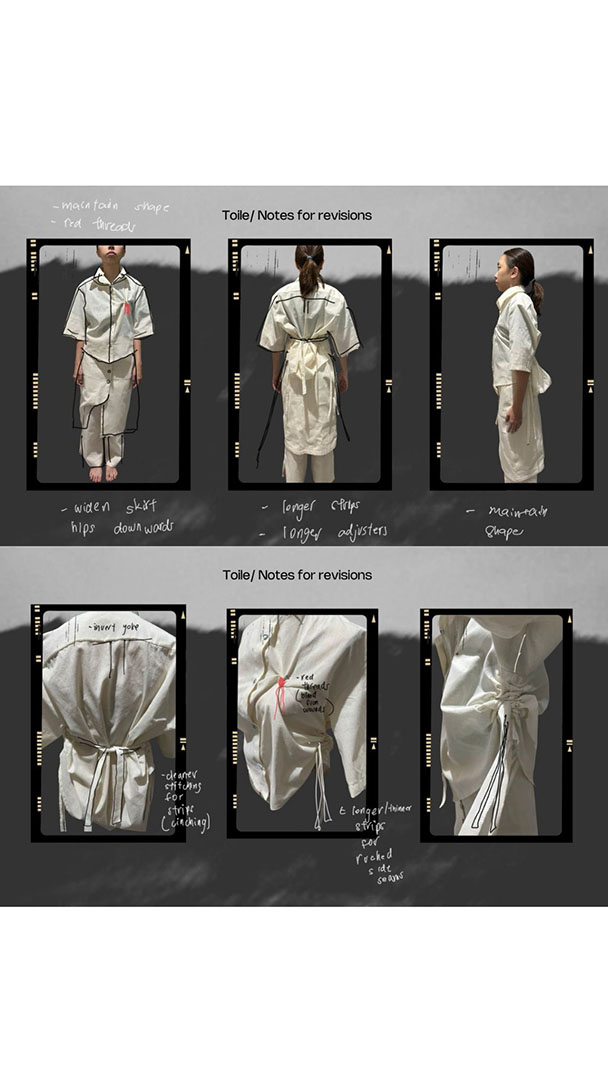
Producing the final output was the most challenging part of designing this collection, especially doing the sashiko stitching and piecing all the parts together, which made me anxious about making mistakes on the final fabric. Through this process, I learned that consistency is important and that it is okay not to be perfect, as restarting from the beginning only consumes more time. By staying true to my vision while keeping an open mind to the feedback and revisions given by my mentors, I was able to balance this challenge. I realized that taking feedback negatively can hinder progress, while asking for guidance when things are not working helps in the long run. As long as I could clearly defend what I envisioned for my work and overall look, it became easier to improve my work without losing my original vision.
De La Salle-College of Saint Benilde © 2026 All rights reserved.