
We use anonymous browser storage to recognize returning visitors. No personal data is collected.
14 May 2026
On May 11, Radyo Magasin sat down with Christine Cheryl Benet, director of Slim’s Fashion & Arts School, now part of De La Salle-College of Saint Benilde. She spoke about the new grant from the Department of Science and Technology-Philippine Council for Industry, Energy and Emerging Technology Research and Development (DOST-PCIEERD) and what it means for Filipino heirloom jewelry.
Benet began by describing jewelry as a living heritage. “Ang alahas ay simbolo ng self-expression at pamana,” she said. For her, each piece carries family memories, cultural identity, and artistry passed down through generations. She explained that heirloom forms like tamburin and filigree are unique to the Philippines, and preserving them matters on the national level because they represent traditions that cannot be found anywhere else. The grant, she added, gives artisans a way to continue these traditions while opening doors to new opportunities.
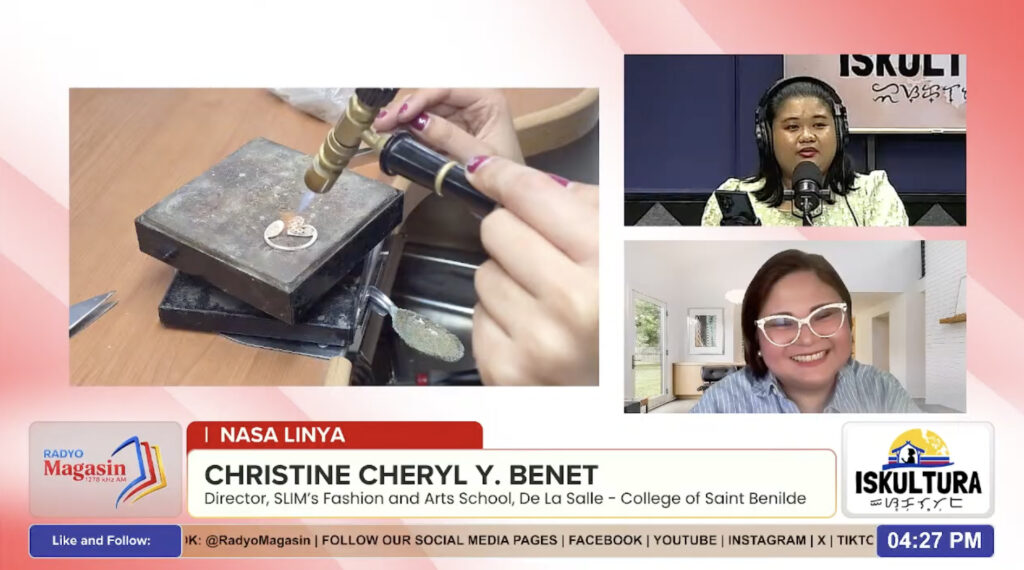
She was clear about the role of technology. “Hindi po namin balak i-replace ang hand making nila because it’s a skill, it’s a technique. Ang gusto namin ay magdagdag ng teknolohiya para makatulong sa kanila.” She explained that artisans will keep their handmade techniques, and tools like CAD and 3D printing will help them with consistency and quality. In English, she said the project is about giving artisans new tools to support their craft.
Benet also spoke about the need for a framework that sets standards for the industry. “Kailangan natin ng standardization para maging reliable ang mga assessors at para ma-recognize ang bawat rehiyon sa sarili nilang disenyo,” she said. She pointed to places like Meycauayan and Davao de Oro where jewelry motifs carry local authenticity, and explained that the project aims to create a system where each region’s designs are recognized as distinct and proudly Filipino. She also noted how Filipino communities abroad, especially in Europe, continue to wear tamburin jewelry, sometimes with more awareness of its heritage than those at home.
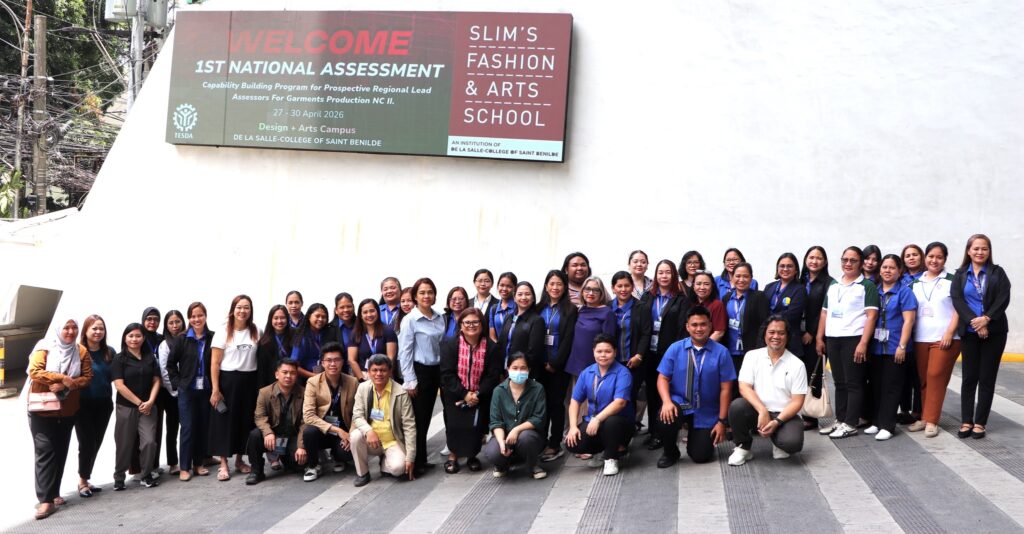
She then mentioned TESDA’s role in this effort. “TESDA is part of this conversation because they handle the qualifications and the assessors,” she said. Slim’s hosted TESDA’s Capability Building Program for Garments Production NC II at the Benilde Design + Arts Campus in April 2026, training prospective regional assessors. The event showed how Slim’s and Benilde provide the institutional space while TESDA implements its protocols to align fashion education with national industry standards.
This initiative builds on Benilde’s custodianship of Slim’s. In 2025, Slim’s formally joined Benilde, bringing its legacy of fashion education under the College’s care. The upcoming Benilde Fashion Museum will house Slim’s archives and provide a venue for showcasing heirloom jewelry alongside garments, showing the institution’s role in preserving craft and culture.
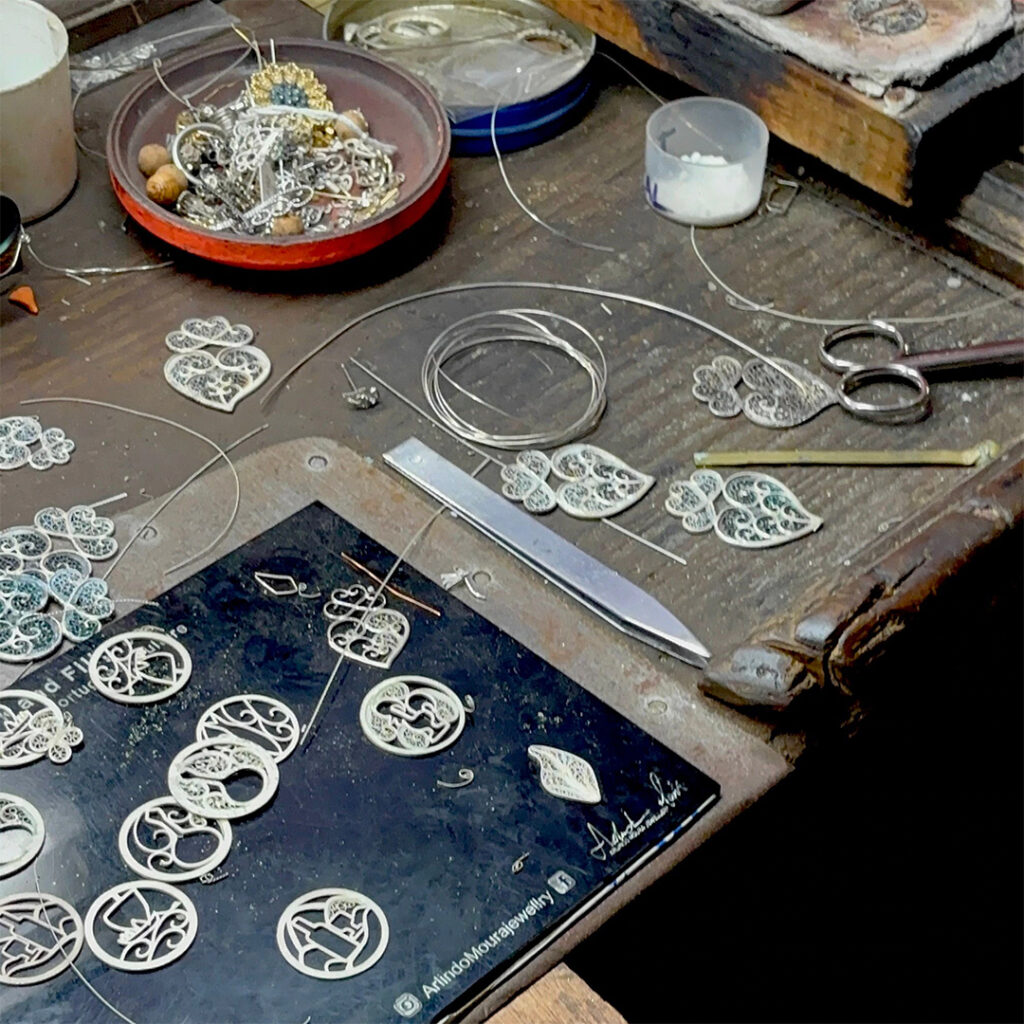
Benilde’s leadership in creative industries has been recognized nationally. The College became the first higher education institution accredited by DOST-PCIEERD for research and development in creative industries. This accreditation came with grants that support projects like jewelry preservation, textiles, and garments, positioning Benilde as a trusted partner in advancing heritage and innovation.
Benet also mentioned plans to integrate jewelry studies into Benilde’s degree programs. She pointed to Fashion Design and Merchandising, Interior Design, and Industrial Design as natural pathways for embedding jewelry heritage into education. These courses already train students in design, sustainability, and market-ready skills, making them strong foundations for future jewelry professionals.
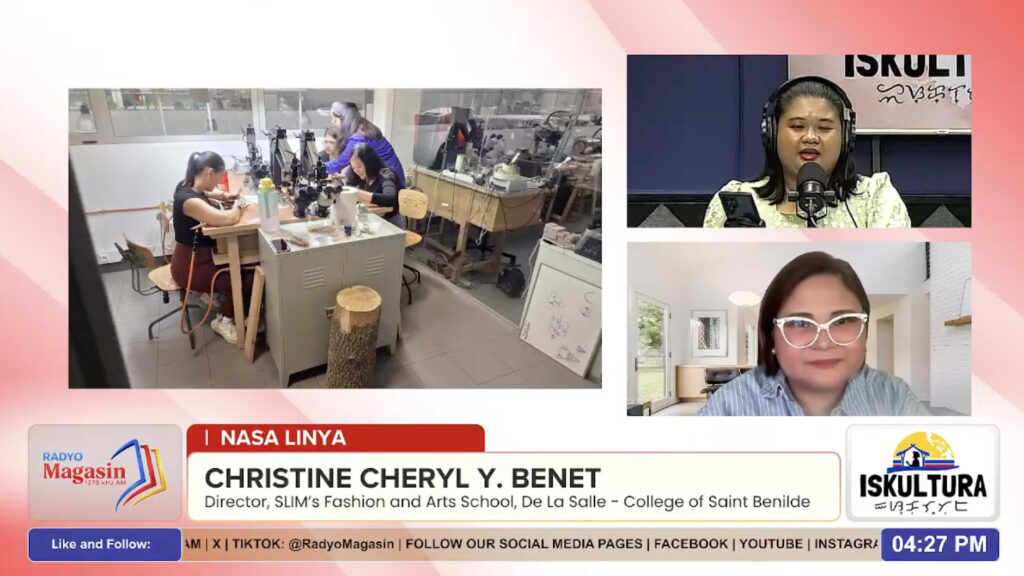
As the interview closed, Benet returned to the heart of the project. “Jewelry is not only about beauty, it is about identity and memory,” she said. With the DOST-PCIEERD grant, Slim’s and Benilde are moving forward with new tools, new platforms, and new recognition for Filipino artisans and their heritage.
Benilde’s role in this story goes beyond Slim’s. The College continues to create spaces where heritage is preserved and modern practices are embraced. From jewelry and textiles to garments and design education, Benilde shows how culture and creativity can move forward together.
For more information on Benilde’s undergraduate programs, contact us at (63) 2 8230 5100 local 1801 or admissions@benilde.edu.ph. You may also visit our website at www.benilde.edu.ph.