18 February 2026
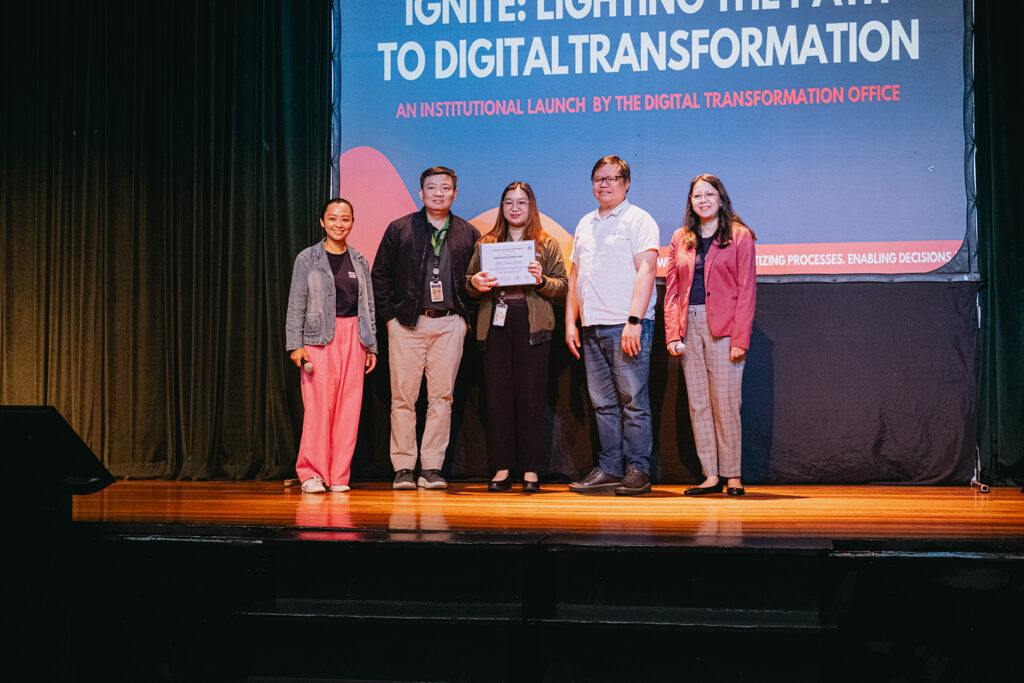
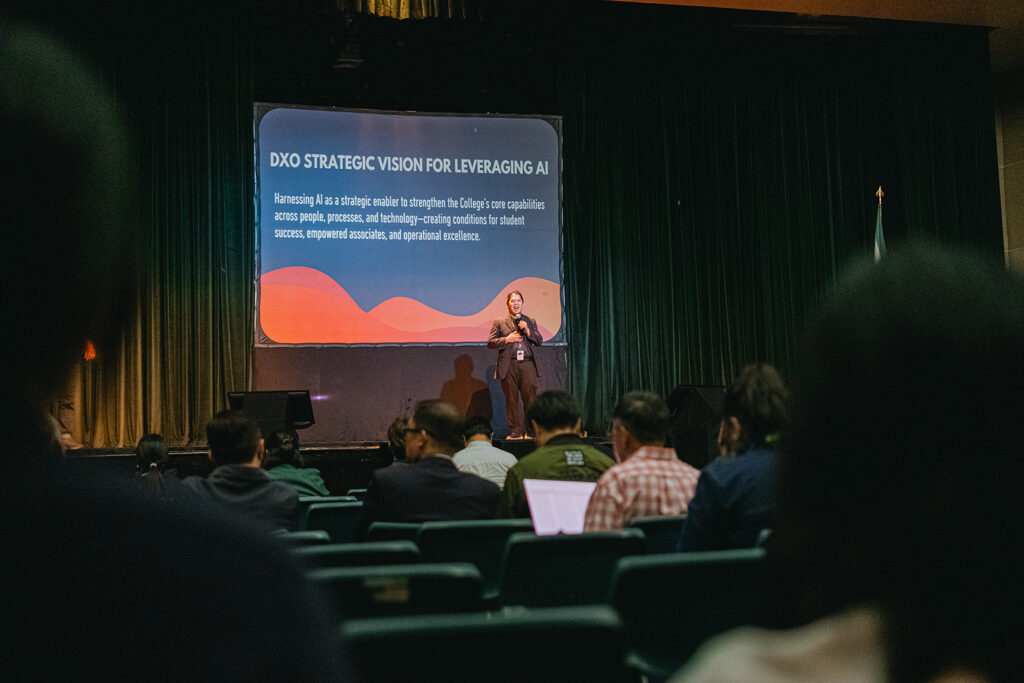
Transformation is about people choosing to grow together. At the IGNITE launch on February 9 at the Augusto‑Rosario Gonzalez Theater in Taft Campus, Benildean faculty gathered to talk about what change really means. The conversations were not about machines or platforms. They were about courage, curiosity, and the daily work of teaching in a world that is shifting fast.
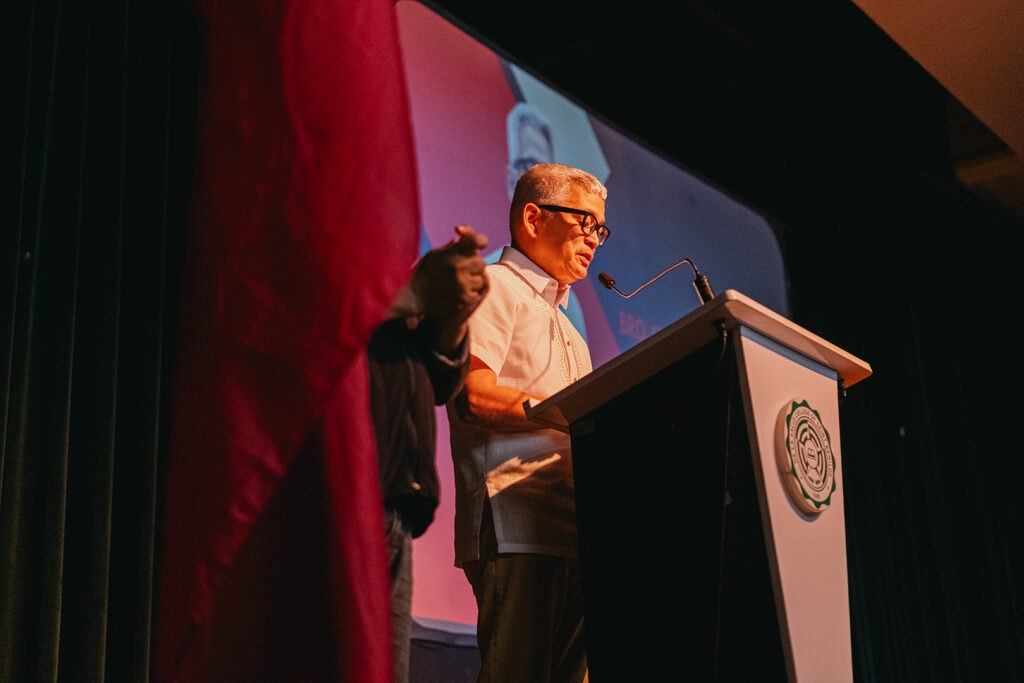
Brother Edmundo Fernandez FSC, known to many as Brother Dodo, opened the day by saying, “Innovation is at the very heart and DNA of Benilde. It is woven into how we teach, into how we create, and into how we respond to the world around us.” That DNA has been recognized globally, with Apple renewing Benilde’s status as the country’s sole Apple Distinguished Higher Education Institution. Across higher education, nearly all colleges now use learning management systems, and 90% of Gen Z learners say technology improves access to education. Yet only 41% believe their campus uses technology to its full potential. Brother Dodo reminded faculty that transformation is human before it is technological. “Technology may shape environments, but it is us, the faculty, who shape experiences, relationships, and lives,” he said.
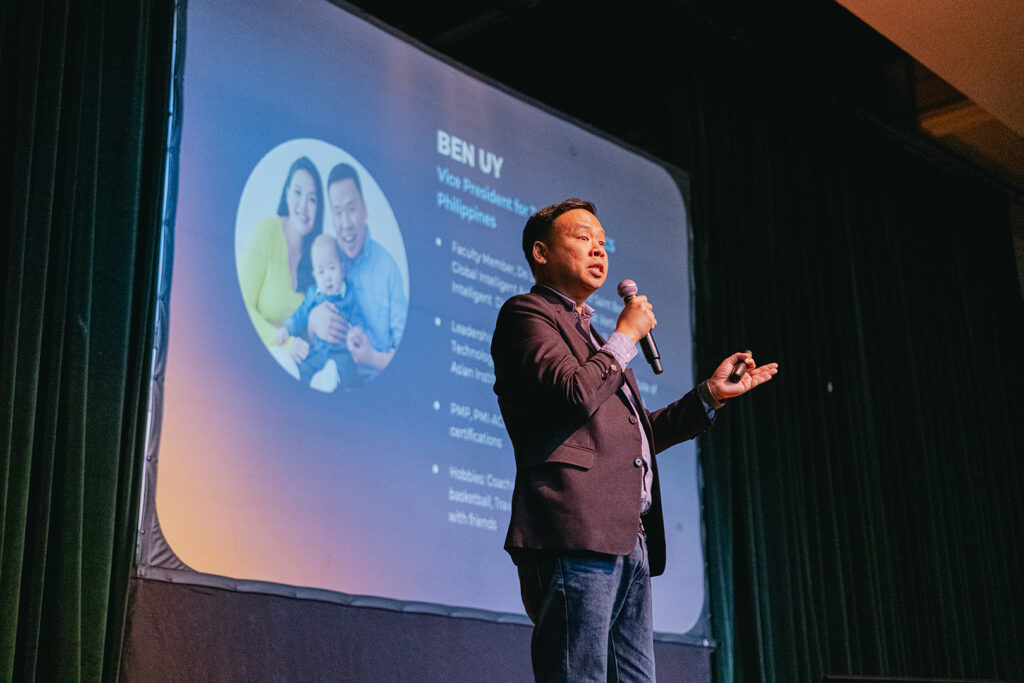
Faculty know the weight of juggling many roles. Ebenezer Uy recalled his time as chairperson when he had to teach, advise students, update grades, produce research, and design new courseware all at once. “I found that at certain points in time, I was really having a hard time already,” he admitted. The challenge was clear: too many tasks, not enough time to focus on teaching. That struggle is familiar to anyone who has tried to balance the demands of education with the pace of change. Globally, 86% of faculty now use digital tools daily in instruction, but only 28% feel fully confident navigating new platforms. The struggle is not just about workload, but about confidence and support.
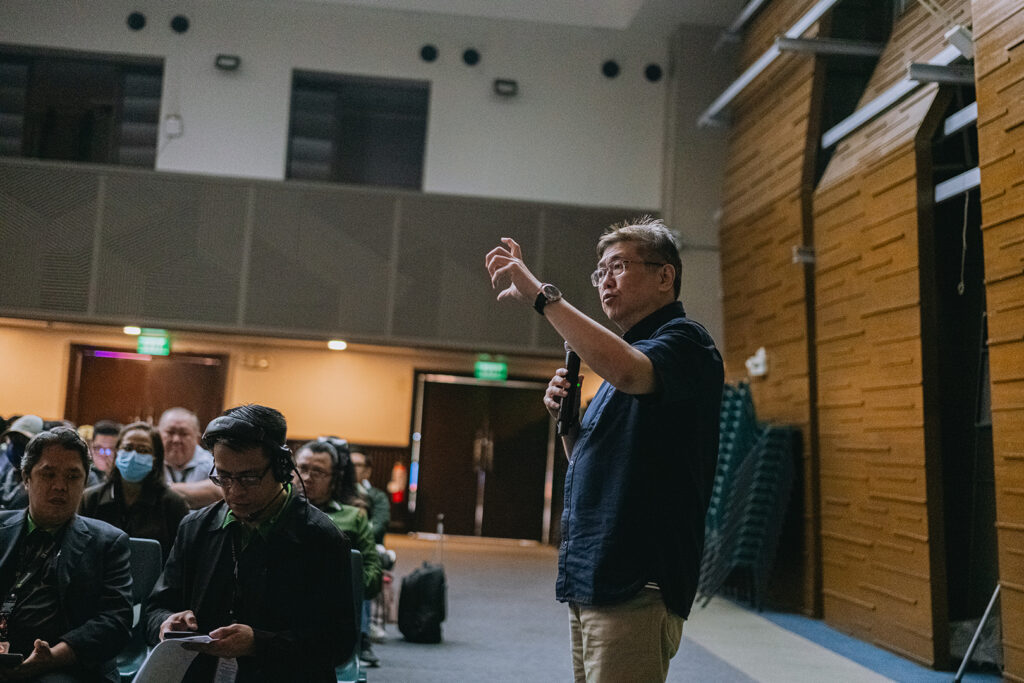
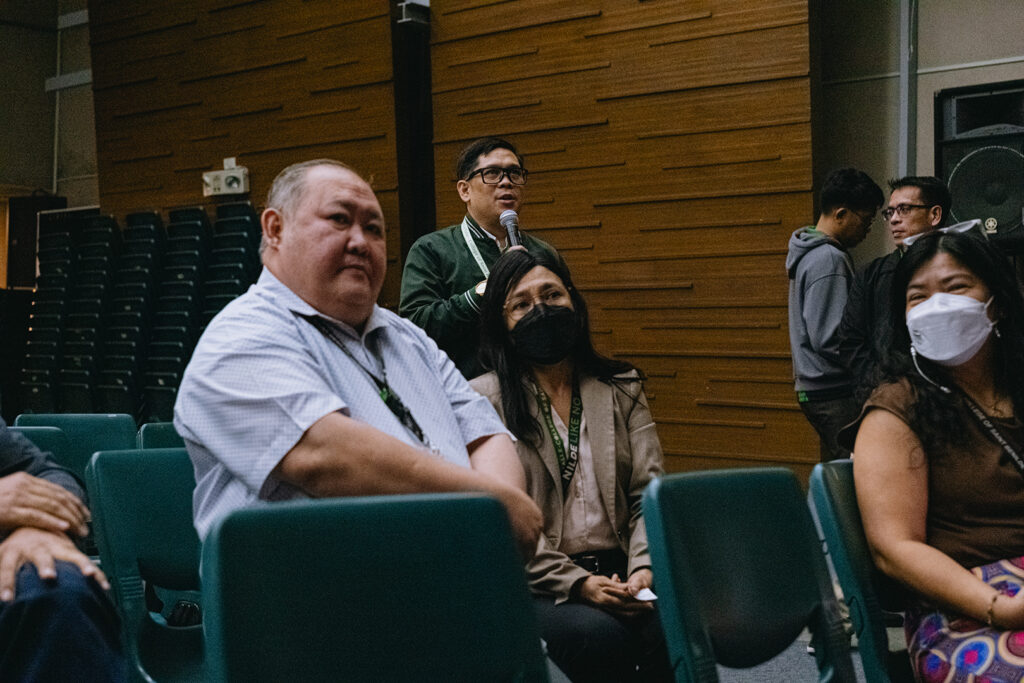
Data was another pain point. Randy Tandoc described how information across the College was scattered and often outdated. “Our data is fragmented… most often static, sometimes delayed,” he said. Faculty also wondered how digital transformation could sustain lifelong learning, how their data would be protected, and how leadership would listen to classroom realities instead of just metrics. These questions echoed earlier steps, like the launch of the country’s first AI‑powered school chatbot, which showed how digital tools can make admissions more accessible and inclusive. Others asked about AI training, chatbot monitoring, and security against hacking. These concerns showed the practical problems that needed answers.
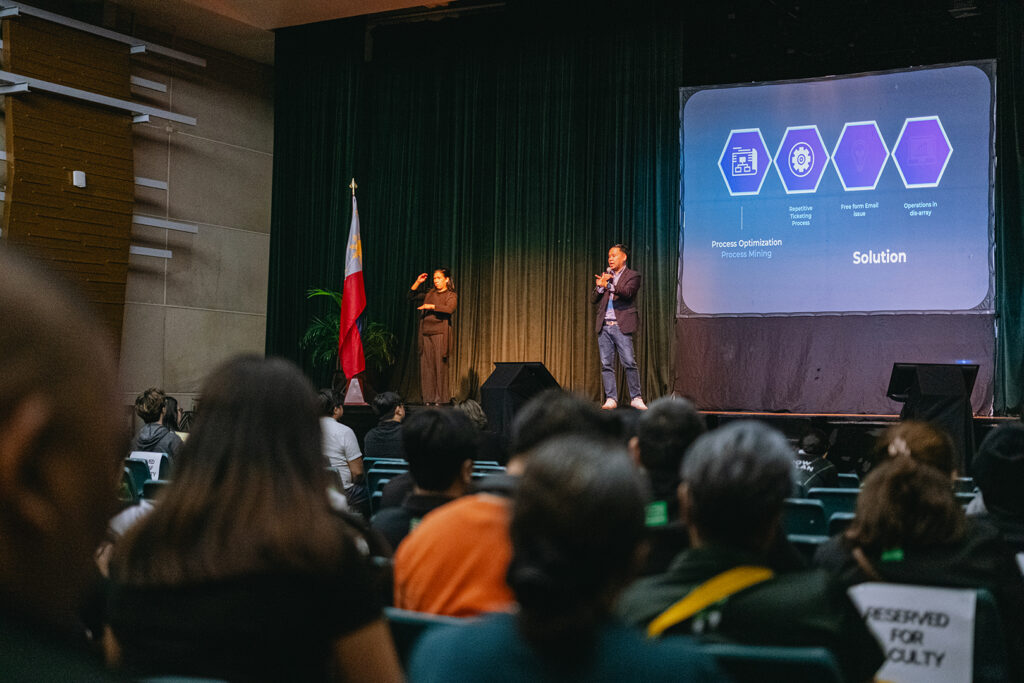
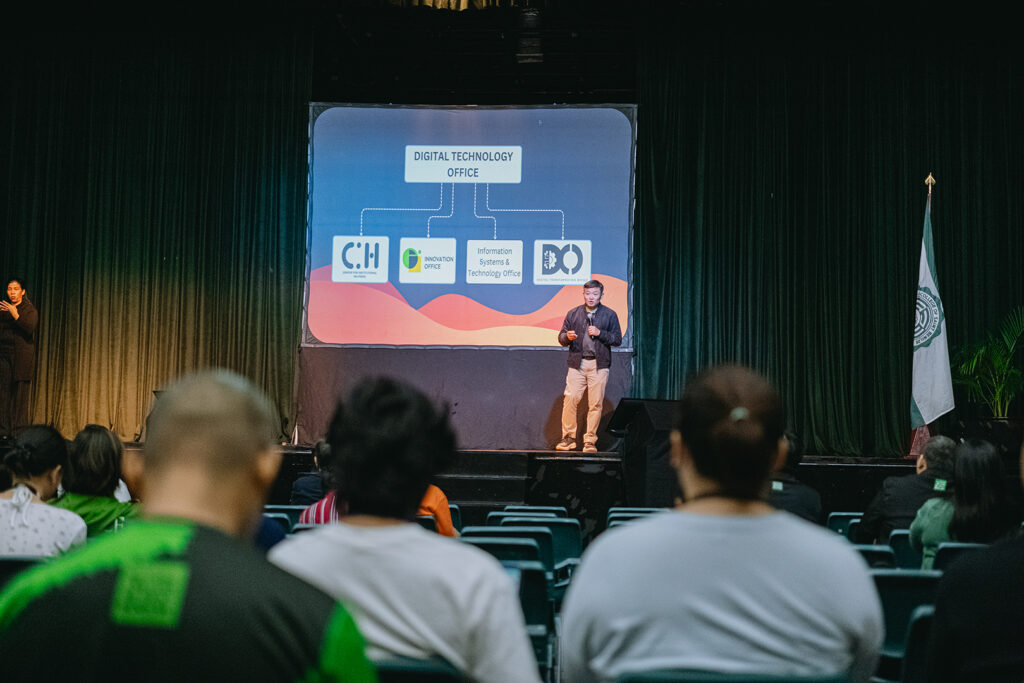
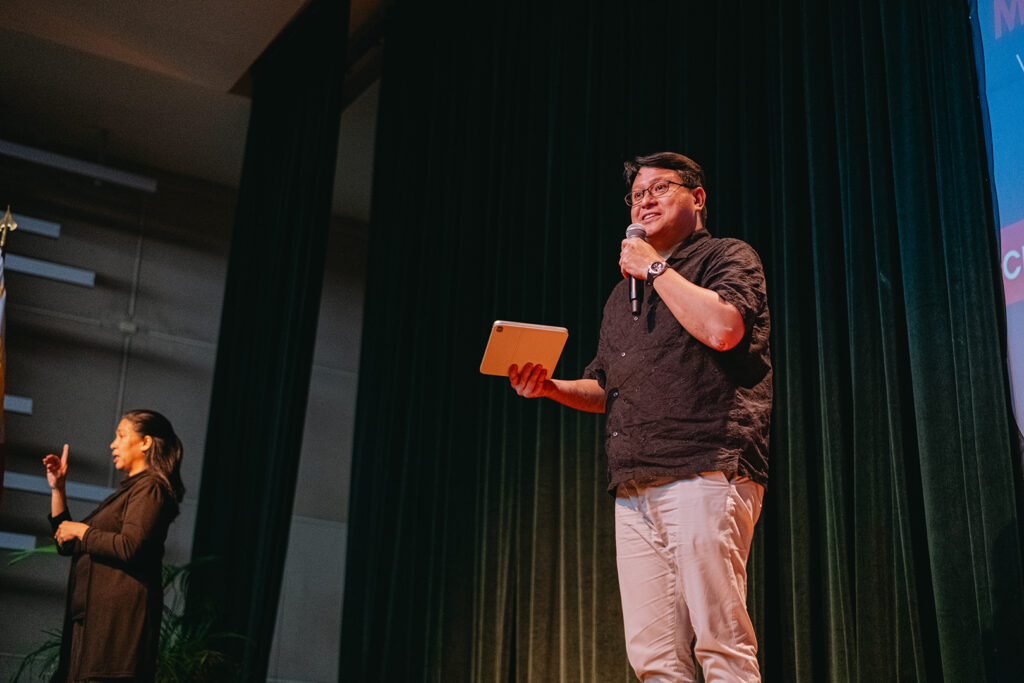
The Digital Transformation Office laid out solutions. Tandoc explained that DXO is built on four pillars: analytics, digitization, workflow, and awareness. He said the goal is student success and empowered associates. To make the point, he used a simple image. He compared transformation to raising chickens: one bird runs fast, darting around without direction, while the other moves steadily, conserving energy and staying on course. “Focus without consistency will fade. Consistency without purpose becomes empty routine. Purpose without focus or consistency remains a dream,” he said. The image was playful, but the lesson was serious. Change is not about speed alone. It is about discipline, focus, and purpose.
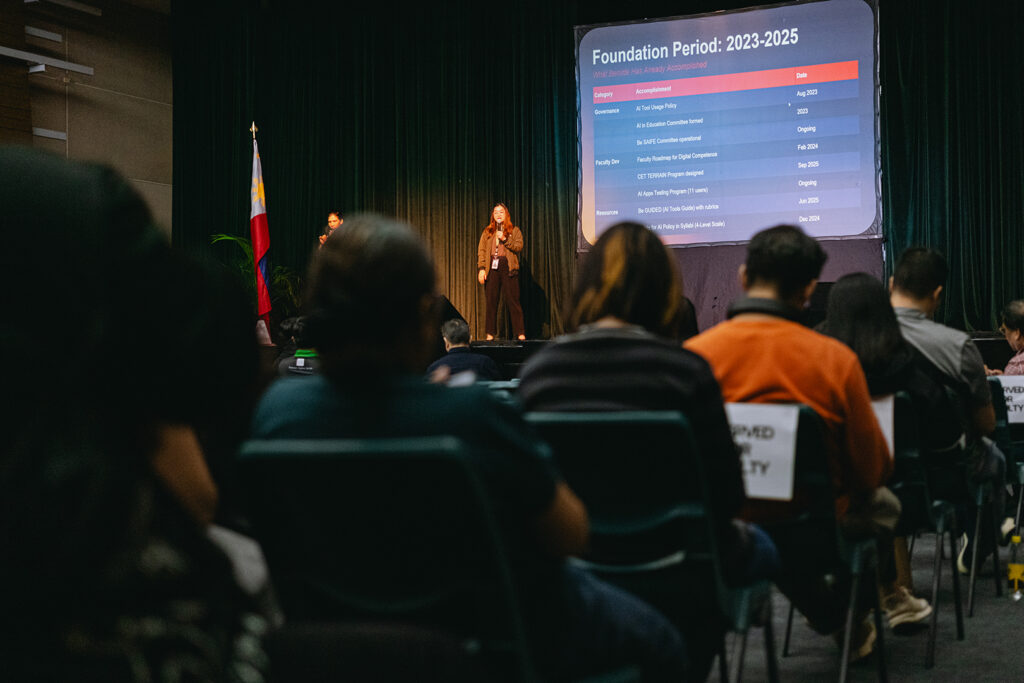
Program lead Jeorge Gonzales walked through the AI roadmap. He said AI will help reduce repetitive work, improve student support, and make decisions more data‑driven. The plan runs in three phases: foundation, expansion, and optimization. Faculty can expect tools for advising, risk analytics, and even AI‑assisted timetabling. From the academic side, CET unit head Jenina Perez presented the AI roadmap for teaching and learning. She showed that Benilde already has policies, training programs, and tool guides in place. “We are not starting from zero. We are scaling what we have been doing,” she said. The next steps are consolidation, expansion, and full integration into the curriculum and research. Partnerships have also played a role. The MOU with Acer strengthened future‑ready education by equipping students with advanced tools, showing that transformation is supported both inside and outside the College.
Faculty concerns about skills and governance were also addressed. Perez confirmed that AI courses and hackathons are available for faculty, while Tandoc described ongoing work on data governance and cybersecurity. Chancellor Benhur Ong added that transformation opens the door to lifelong learning, extending Lasallian education beyond graduation. “Learning never stops. There is a need to re‑skill, up‑skill, and retool. That is where digital transformation comes in,” he said. These answers showed that DX is a shared effort, with leadership listening and systems being built responsibly. Administrative associates, often the silent pillars of digital transformation, report efficiency gains from workflow automation, yet nearly half feel left out of DX conversations. DXO’s governance and awareness pillars aim to bring them into the process.
Stories gave transformation its lore. Uy told of a blind student who excelled in programming and later became a team lead at Accenture. The student’s success was not just about skill, but about resilience and inclusion. It became a parable of how barriers can be turned into strengths when support and opportunity are present. Uy also recalled Benilde’s journey in the Microsoft Imagine Cup, where students who were once seen as underdogs became national champions. “Whenever I felt that I’m belittled, I would remember the trophy. That in spite of being underdogs, with God’s grace, we were able to conquer and be champions,” he said.
The story carried the spirit of transformation: courage to compete, persistence to endure, and faith to rise. Just as Benilde became the first Adobe Creative Campus in the Philippines, joining a global network that empowers creativity through digital platforms, these stories showed how the College often steps into uncharted territory and thrives. Students today expect personalized feedback, real‑time progress tracking, and mobile learning tools. Benilde’s stories of resilience show that transformation is not only about meeting expectations, but about exceeding them with courage and creativity.
The future of transformation was also made clear. Faculty are seen as co‑creators of the School of the Future. Ong pointed out that education should not stop at graduation. He said Benilde is now looking at how to serve learners from ages 25 to 60, offering programs for reskilling and upskilling. Perez showed how AI integration will move into curriculum and research, making digital tools part of everyday teaching.
And Vice Chancellor for Academics Angelo Marco Lacson called on faculty to carry three values: curiosity, courage, and commitment. “Curiosity to explore new possibilities, courage to try even when things are unfamiliar, and commitment to continuous improvement for yourselves, for your students, and for the College,” he said. The February 2026 launch built on the first IGNITE event in November 2025, which unveiled the AI roadmap and the vision of the School of the Future. Each milestone adds to the journey, showing that transformation is not a single event but a chain of choices and commitments. Blended learning models worldwide are already linked to greater engagement and reduced attrition. At Benilde, faculty are being asked to co‑create these experiences, making the School of the Future a shared design rather than a top‑down plan.
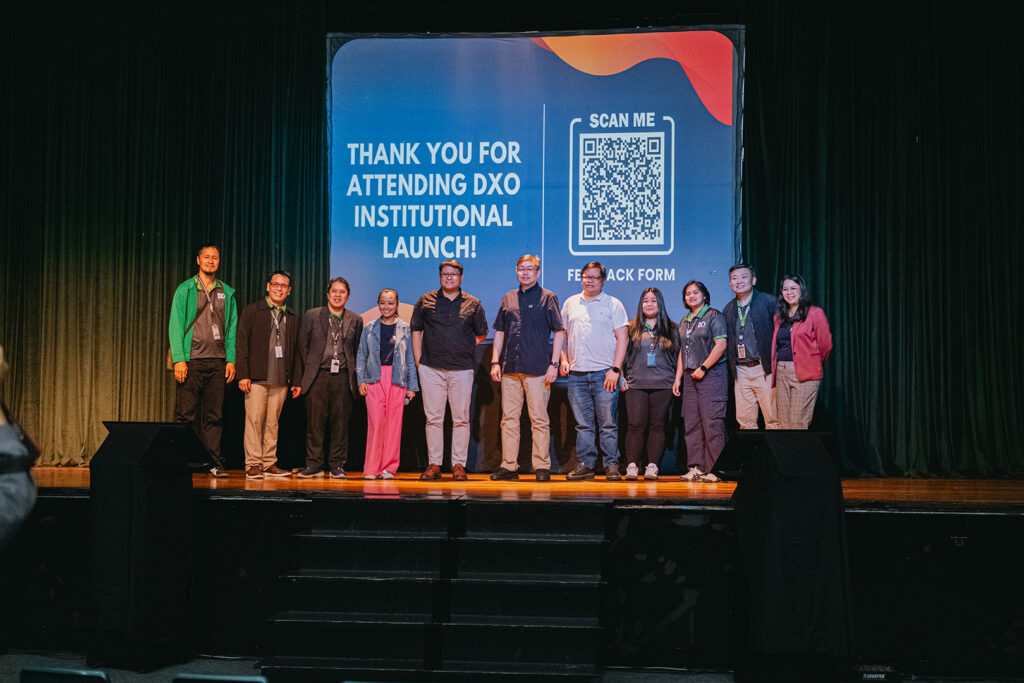
The IGNITE launch showed that transformation at Benilde is not a single leap but a series of steps, each carried by people who choose to grow together. Faculty stories, metaphors, and questions gave the day its heart; milestones like the chatbot, the Acer partnership, the Apple recognition, and the Adobe Creative Campus status revealed that the College has already been walking this path. The February 2026 launch built on the first IGNITE event and pointed forward to the School of the Future. What remains constant is the call for curiosity, courage, and commitment, values that make transformation more than technology, more than programs, and ultimately a shared journey.