16 February 2026
MCAD opened Poetry of Physics on February 12, bringing science out of the classroom and into lived experience. The show draws our attention to forces we often overlook, such as time, rhythm, balance, and scale, and how they shape the way we see. Curator Joselina Cruz describes the exhibition as a meeting of physics and poetry, where perception becomes the real subject. The works do not explain how science works. They use science to show how perception works, turning physical processes into experiences that make us notice ourselves seeing.
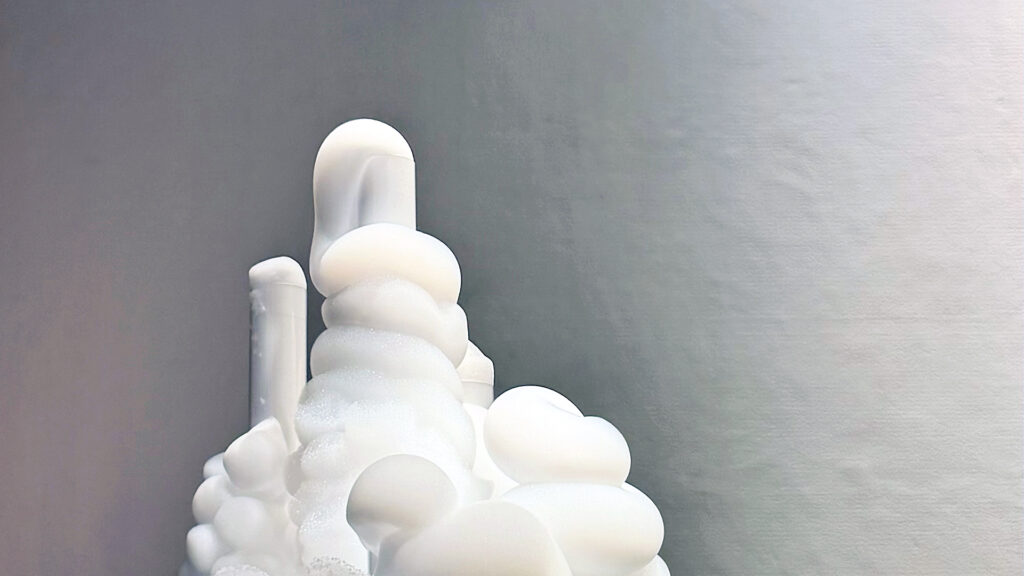
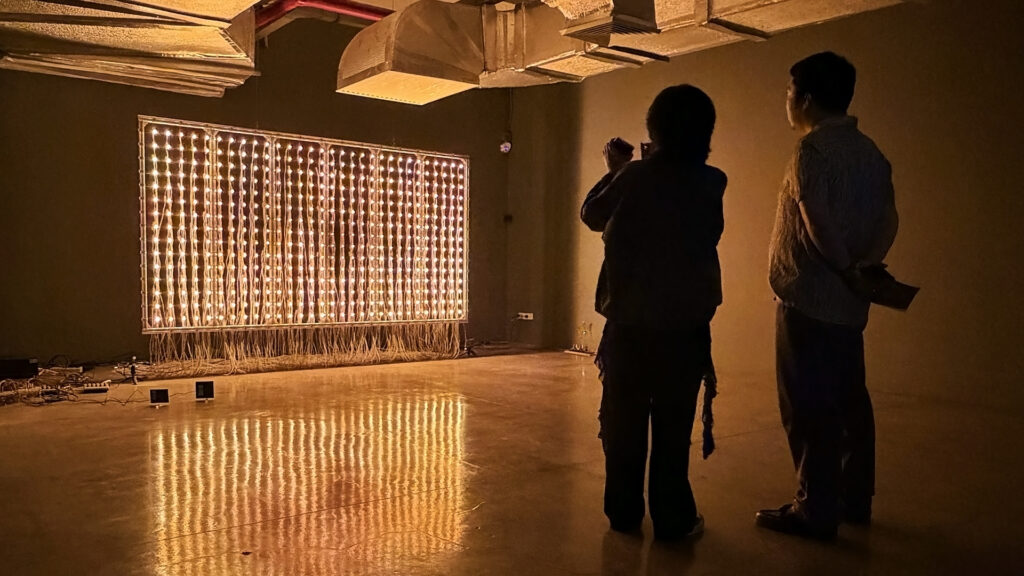
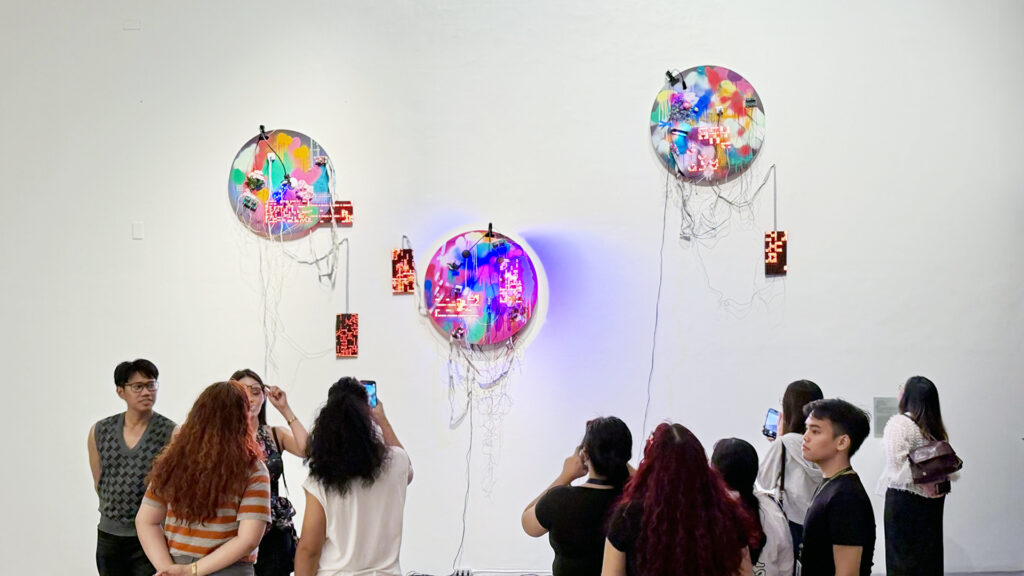
The first encounter sets the tone. David Medalla’s Cloud Canyons rises so slowly that the foam towers seem frozen. You watch, and nothing changes, until suddenly a bend or collapse shifts the form. On the wall opposite, Bagus Pandega’s Indecisive Things Series loops LED patterns with such consistency they feel static, even though the system is always moving. One is organic, the other electronic. One collapses, the other repeats. Yet both create the same effect, a sense of stillness that depends on how long you look. Physics is always at work, but perception decides whether you see change or miss it. Their contrast makes them similar. Foam eventually gives way, lights keep looping, and both ask us to notice how stillness can be deceptive.
Cruz explains that the exhibit is about perception as the thread that ties everything together. She writes that the artists use physics as material for poetry, not to teach formulas but to unsettle how we see. Foam, rhythm, imbalance, planetary winds, and viral circulation are presented as ways to make perception visible. This framing sets the expectation that what you encounter will be less about science lessons and more about how we experience change.
From there, the exhibit opens into other explorations. Pandega’s A Pervasive Rhythm turns car blinkers into eyes, pulsing with sound and light. The irony is clear. Blinkers are meant to signal a turn, a change in direction, yet here they are installed to blink endlessly. The repetition becomes a static display, a rhythm that never leads anywhere. The piece expresses inevitability, like the human need to blink, but it does so through a system locked in constant repetition. What should mark change instead becomes a reminder of how change itself can feel inevitable and mechanical.
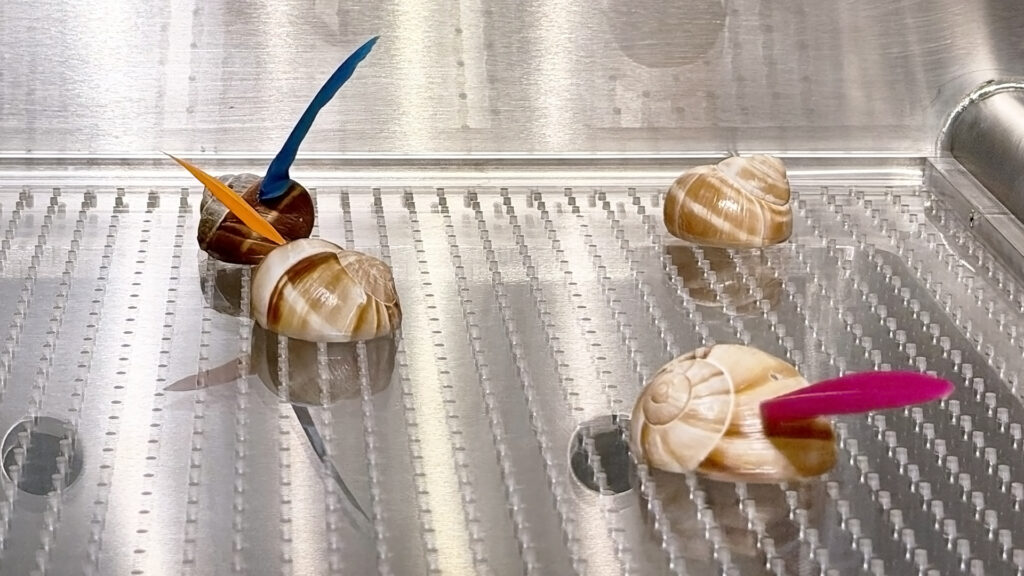
Aki Sasamoto’s Social Sink Microcosm #2 sets shells on a surface where air blows through small holes. The shells slide across and spin according to their shapes. The counterclockwise spiraling shells can be seen as a way to express minority identity, moving against the usual flow. Some shells carry boa feathers that catch the air, making them spin faster. This creates another layer, suggesting that even within a minority group there are differences, and some move with more force than others. The physics here is simple, air pushing against shapes, but the effect is a microcosm of social dynamics. The piece shows how imbalance and variation exist even inside communities that already stand apart.
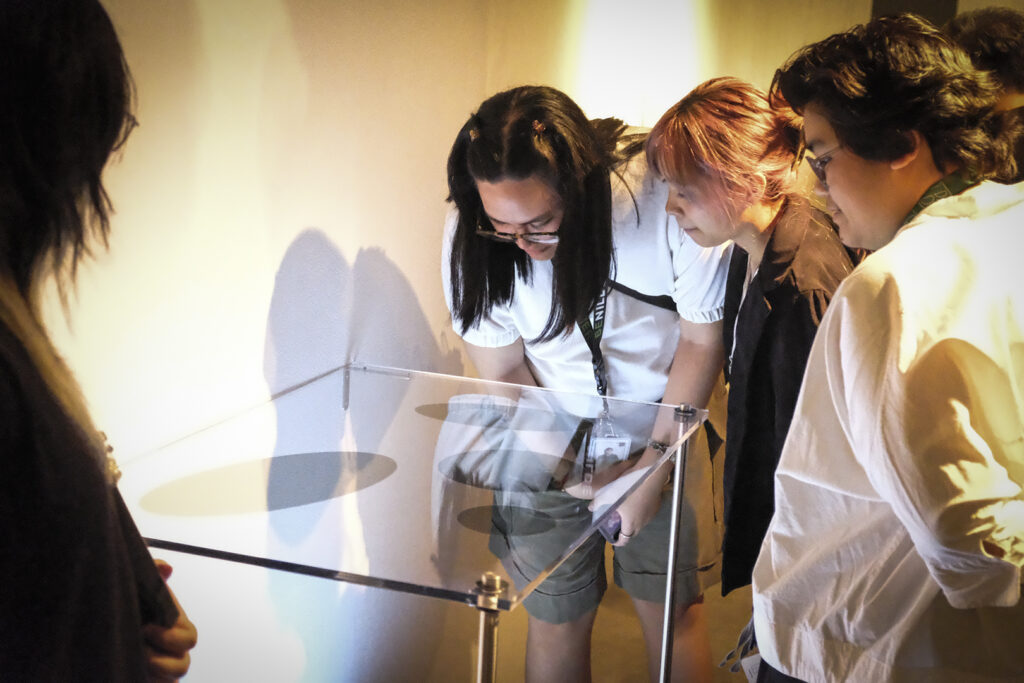
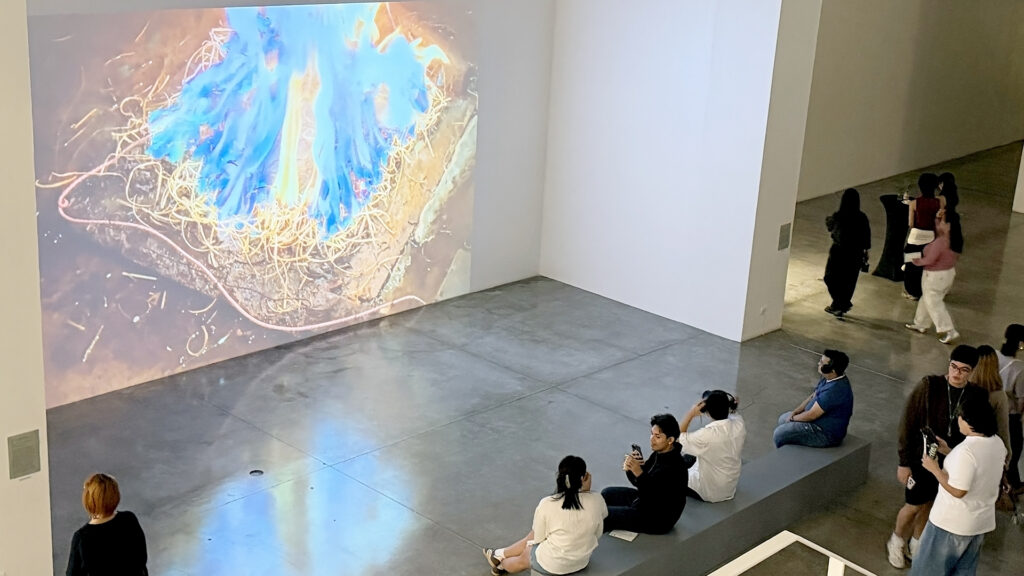
Most of us do not notice wind speed at ground level. A breeze might brush past, but the larger currents that move across the planet remain invisible. Ian Carlo Jaucian brings that hidden scale into play. In Still Life, shadows shift with global wind data, turning those planetary forces into visible motion. What looks like a simple play of light is actually a reminder that the smallest details in front of us are shaped by systems far beyond our reach. The piece makes us aware of how local perception is tied to global movement. It is not only shadows on a wall. It is the planet breathing, and that breath becoming part of what we see.
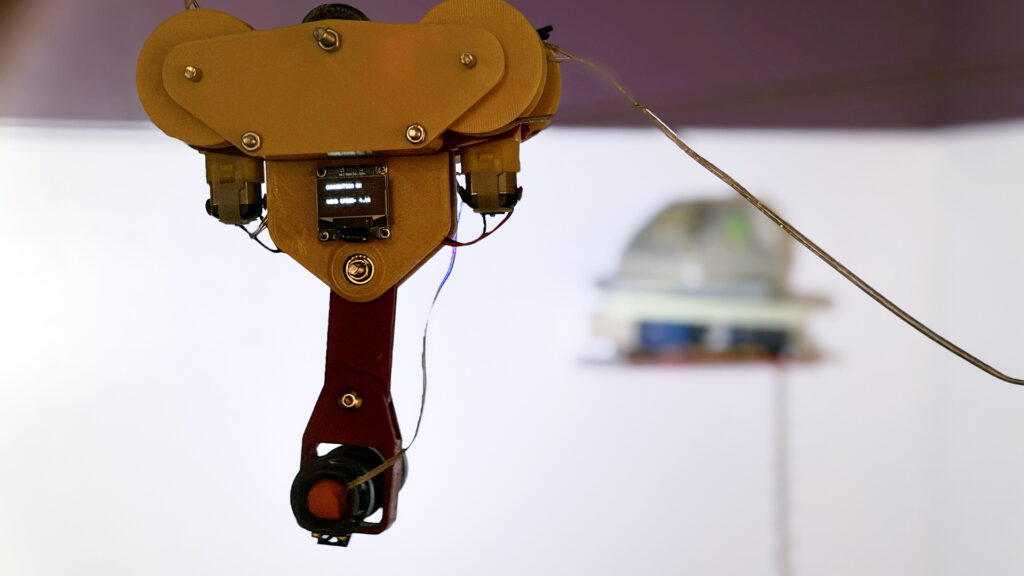
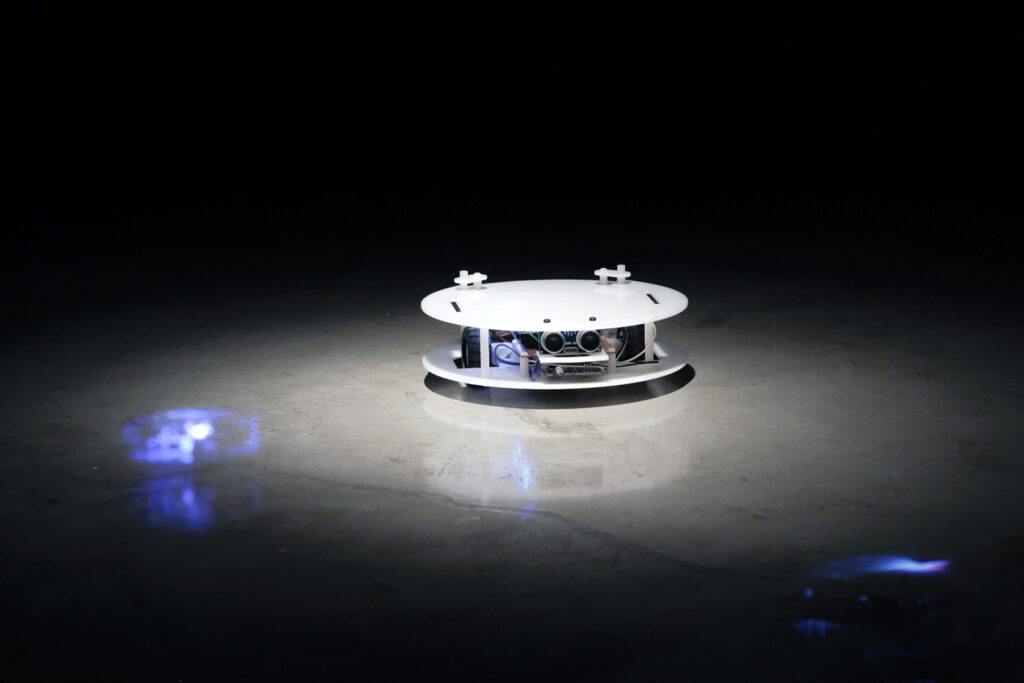
His Viral Automata Mk2 creates a swarm of robots that infect and reinfect each other. The cycle never ends, and persistence becomes the point. The system keeps circulating, even when nothing new seems to happen. The irony is that infection, usually seen as destructive, here becomes generative. The robots keep the rhythm alive by passing it on. The work leaves open the question of what is really being circulated. Is it energy, information, or simply the act of persistence itself? By refusing to settle on one answer, the piece invites viewers to think beyond biology and consider circulation as a broader principle. It becomes a metaphor for how systems endure, how repetition creates continuity, and how perception turns endless cycles into meaning.
Taken together, the exhibit shows how artists use physics as their material for poetry. Foam, rhythm, imbalance, planetary winds, and viral circulation all become ways to place perception front and center. The works make us aware of how we experience them, almost like watching ourselves perceive.
Other works on display include Jaucian’s On the Hidden Labors of Rest, and Matters Concerning Stillness, On rigor in science, and deus = x;. Also featured are Pandega’s Rhythmic Devotion, Sasamoto’s Point Reflection, and Fischli and Weiss’s Der Lauf Der Dinge (The Way Things Go). A smaller version of Medalla’s Cloud Canyons is also on view at MCAD’s mezzanine.
As one of the first public programs of MCAD related to this exhibition, a talk with artists Bagus Pandega and Ian Carlo Jaucian was held on Saturday, February 14. The discussion focused on objects and interactions that led to creating the works that are part of the exhibition.
Other public programs include an Industrial Design Showcase on March 6 at the 12th Floor Cafeteria of the Design+Arts Campus. This celebration of DIY Culture will feature works of students and faculty members of the Benilde Industrial Design program. On March 20, MCAD will host Sonic Experimentation: A Performance by Elemento at the Ground Floor. Elemento is a collective of artists, poets, painters, and performance and sound artists. They will perform using instruments called sandatas.
The Poetry of Physics exhibit runs until April 12, 2026. For guided tours or group visits, contact MCAD at mcad@benilde.edu.ph or @MCADmanila on Facebook and Instagram.