We use anonymous browser storage to recognize returning visitors.
No personal data is collected.
04 September 2026
What does it mean to care for the world around us while also cultivating the qualities that shape the way we live?
That question guided Nature × Nurture, the solo exhibition of Abe Orobia, a faculty member of the Fine Arts program at Benilde. Presented at Nami Art Gallery, the exhibition invited viewers to think about humanity’s relationship with nature, personal responsibility, and the choices people make every day. For Orobia, these ideas have long been part of his artistic practice.

“My artistic voice consistently revolves around interconnection and symbiotic relationships between humanity and environments,” he shared.”It highlights co-dependence, vulnerability, adaptability, resilience, and triumph.” Those themes appear throughout the exhibition, where human figures and natural landscapes share equal importance. The works encourage viewers to consider how closely human life remains tied to the environments that sustain it.
Nature has remained a constant source of inspiration throughout Orobia’s life. Growing up in what was once a rural part of Muntinlupa, he spent much of his childhood surrounded by rice fields, wildlife, and open spaces. Those experiences stayed with him as the area gradually changed through development.
His awareness of environmental issues such as pollution, deforestation, and mining eventually found its way into his work. Questions about conservation and preservation became recurring subjects that continue to shape his artistic practice today.

The exhibition filled its compositions with symbols that carried different layers of meaning. Grey-toned figures with visible skeletal elements pointed to human vulnerability and mortality. Golden wings appeared throughout the collection as symbols of memory, healing, and redemption. Small orbs of light represented compassion, creativity, reason, and love.
Many of the works also incorporated discarded aluminium paint tubes, a material that has become one of Orobia’s most recognisable signatures. “The crumpling of the aluminium sheets is done not just for stylization purposes but serves as metaphor to our crucial and fragile role in taking care of our surroundings,” he explained.
The material first entered his work after he began saving used paint tubes from his studio. Friends later started contributing their own discarded tubes, allowing the practice to grow into a community effort connected to his environmental advocacy. “In a sense, my narrative is not to simply encourage conservation and preservation, but I practice what I am imbuing in my works,” he said.
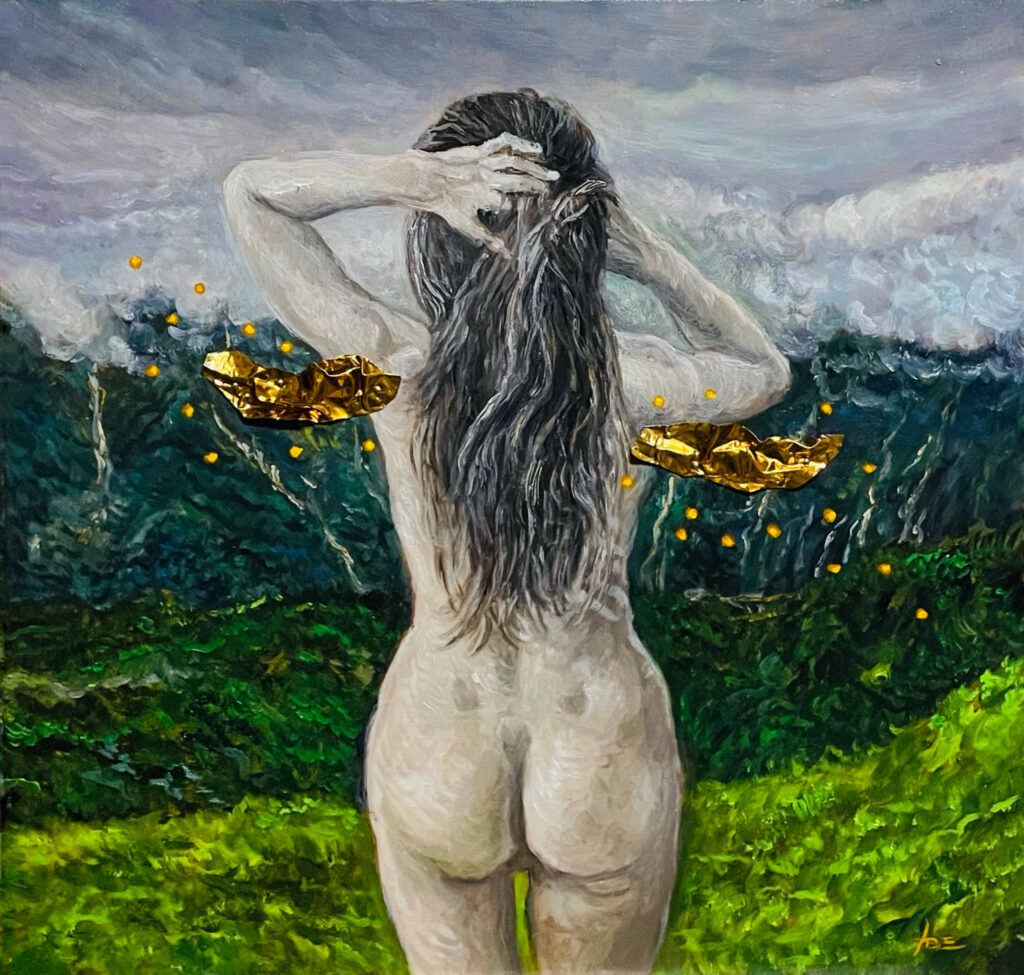
The recycled elements remain visible throughout Nature × Nurture, giving physical form to the ideas of care, responsibility, and environmental awareness that run through the exhibition.
The exhibition revisited ideas Orobia explored in earlier works before the pandemic. This time, larger figures occupied much of the composition and encouraged viewers to consider humanity’s place within a world that remains far bigger than itself.
One of the exhibition’s key works, Heaven’s Embrace, served as a starting point for the series. The painting depicts a woman with raised arms standing before a wheat field beneath a sunset sky. Orobia described the scene as an image of surrender and acceptance shaped by what people choose to cultivate throughout their lives.
The idea of cultivation runs through the exhibition from beginning to end. “We must nurture and tame our own nature or faculties to be able to understand and take care of the environment,” he said. His view expands environmental care beyond forests, rivers, and oceans. It also asks people to examine the values, habits, and decisions that shape the way they relate to others and the world around them.

The same philosophy appears in Orobia’s work as an educator. In 2025, he curated Oubaitori at Nami Art Gallery, giving ARTELIER students and alumni an opportunity to present their work in a professional gallery setting. The exhibition drew inspiration from the Japanese belief that individuals grow and bloom in their own time.
Orobia described his approach to mentorship through a simple image. “I see myself as someone tending a garden, a community of people who are eager to share, grow, and learn together.” The image of a garden echoes many of the ideas found in Nature × Nurture. Growth, care, and cultivation appear throughout the exhibition and continue in the way he guides emerging artists through opportunities beyond the classroom.
For students, learning from a practicing artist offers a direct view of how ideas take shape beyond the studio. Orobia’s exhibitions allow them to see how research, concept development, material exploration, and storytelling come together in a public setting. They also provide examples of how artists engage with cultural, social, and environmental concerns through their work.
His involvement in exhibitions and curatorial projects creates opportunities for students to connect with galleries, audiences, and fellow artists. Experiences such as Oubaitori extend learning beyond academic requirements and introduce students to the realities of professional artistic practice.
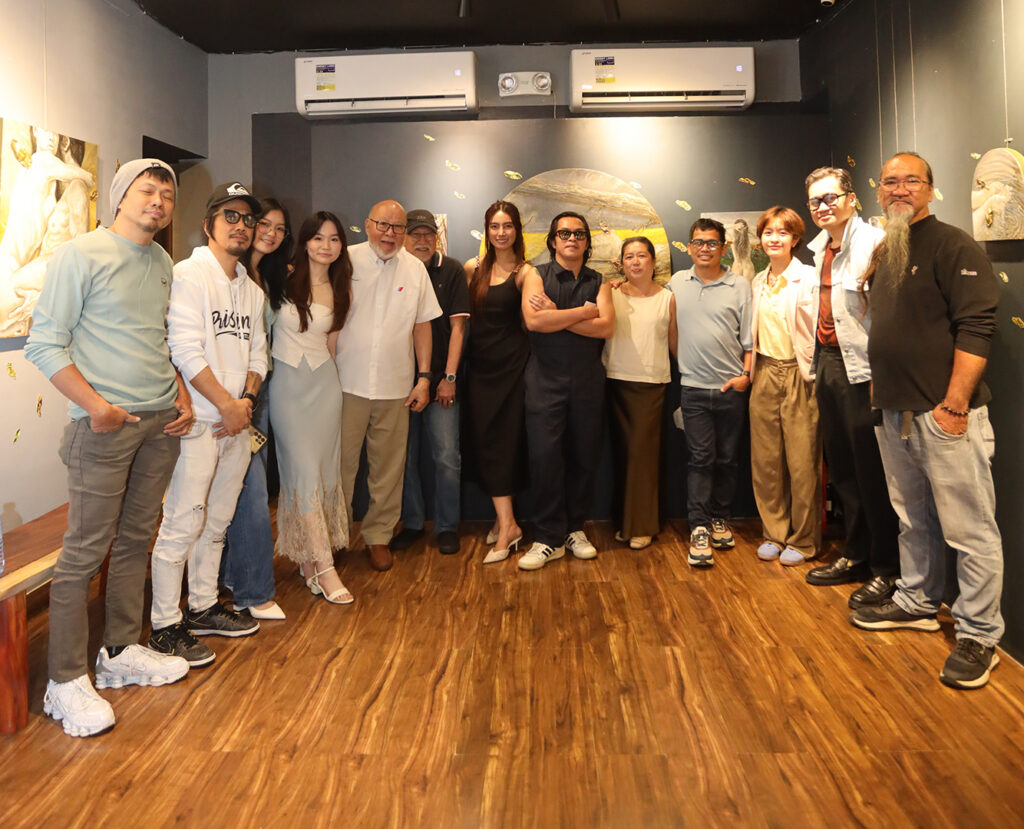
Through Nature X Nurture, readers gain a glimpse into the ideas that shape Orobia’s work both as an artist and as a faculty member. The same themes of stewardship, responsibility, growth, and care that appear across the exhibition continue to inform the way he mentors students and contributes to the broader creative community.
For more information on Benilde’s undergraduate programs, contact us at (63) 2 8230 5100 local 1801 or admissions@benilde.edu.ph. You may also visit our website at www.benilde.edu.ph.