We use anonymous browser storage to recognize returning visitors.
No personal data is collected.
The Master in Global Governance and Management (MGGM) is an interdisciplinary graduate program jointly offered by the School of Management and Information Technology (SMIT) and the School of Diplomacy and Governance (SDG). The program integrates the fields of global governance, diplomacy, public administration, and management to equip professionals with advanced knowledge, skills, and values necessary to understand and address complex challenges in an increasingly interconnected and dynamic global environment. Through the study of governance systems, international relations, public policy, strategic management, and emerging global issues, students develop competencies in critical analysis, evidence-based decision-making, policy formulation, organizational leadership, and collaborative problem-solving.
The program prepares graduates for leadership and management roles in government institutions, international organizations, development agencies, civil society organizations, academic institutions, and the private sector. It promotes ethical and socially responsible leadership, innovation, and professional excellence while strengthening students’ capacities for independent inquiry and applied research. By fostering lifelong learning and a global perspective, MGGM enables graduates to contribute effectively to governance initiatives, organizational development, and sustainable solutions to contemporary local and global challenges.
Program Length: 33 academic units and 1 non-academic unit (6 trimesters)
This program is for you if you want to advance into leadership roles in government, NGOs, or international organizations. You will learn to:
BRIDGING COURSES
INSTITUTIONAL COURSE
CORE COURSES
PROFESSIONAL COURSES
FINAL INTEGRATIVES
Interested applicants for the Master in Global Governance and Management program can find information about admission schedules, requirements and procedures on the Admissions page.
The School of Management and Information Technology (SMIT) offers business programs that are reflective of today’s industry in a technology-driven environment.
In SMIT, classes are facilitated in an environment where learning happens in the collaboration among faculty members, students and the associates.
SMIT students are honed to be not only professionally competent but also responsible professionals, business leaders, and entrepreneurs who value diversity and continuous learning through innovation.
Learn the trade and secrets from the industry leaders themselves. Majority in our faculty roster are seasoned industry practitioners who can help you understand the practical application of business theories and textbook lessons.


Learn the ropes of getting jobs done with the help of the technology that is relevant to your chosen industry. Business and programming applications like SPSS, SQL, SAP, Eclipse, JDK, Apache Tomcat, Android Studio, Visual Studio, ArchiMate, Dia Portable, XAMPP, and the like are essential parts of harnessing the full potential of your future career.
Our computer labs also boast exclusive hardwares and up-to-date configuration.
SMIT promotes international exposure to students for them to enrich their global perspective of their courses. As part of their experiential learning, the following are offered across all SMIT programs.
These are all OPTIONAL since related expenses (i.e. program fees, airfare, accommodation, living expenses, etc.) are not part of the regular tuition and fees.
Educational Tours are subject to CHED regulations. Tour destinations are also subject to change

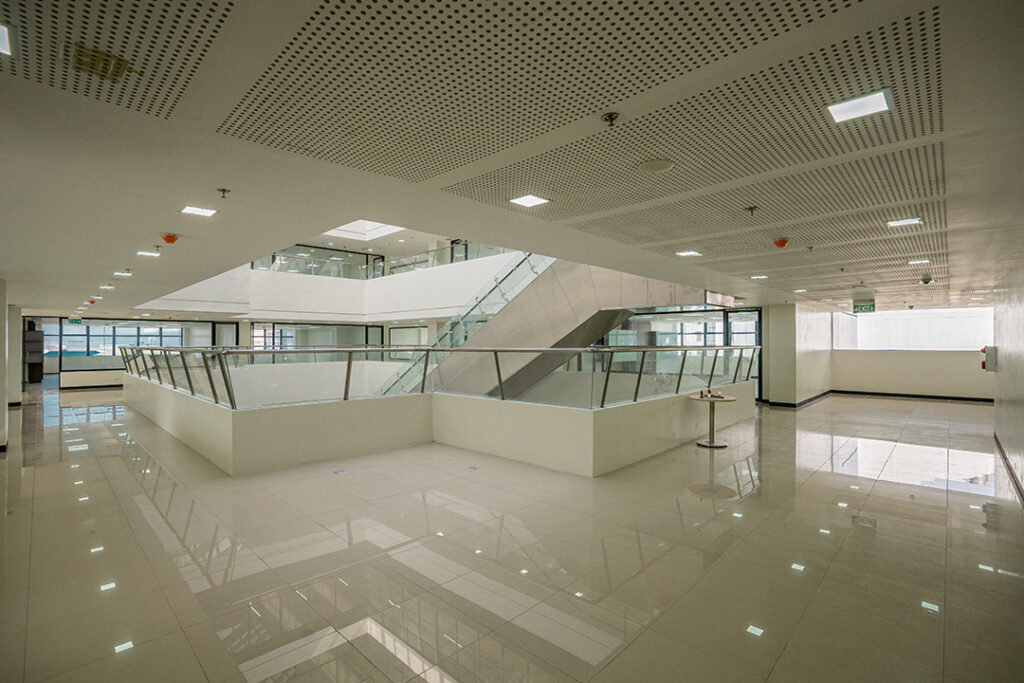
The Atrium@Benilde Campus, a ten-storey academic hub, is built for inclusive learning and hybrid classes. It welcomes diverse minds, encourages fresh thinking, and brings the campus experience into a vertical space.