
We use anonymous browser storage to recognize returning visitors.
No personal data is collected.
17 August 2026
On August 12, 2026, the Benilde Marketing Center held its Graduate in Focus session online via Zoom, featuring the Master in Global Governance and Management. Hosted by Rebekah Hashmi, the session introduced the newest graduate program to professionals looking for ways to work across business, government, diplomacy, and development.
The session opened with a question about how events happening thousands of kilometers away can affect everyday life in Manila. A change in oil prices can raise local fuel costs, while a new feature from an AI company can quickly affect an entire industry. These examples set up the central idea behind the program: decisions and disruptions now move across borders and sectors, making it harder to understand a problem from only one perspective.
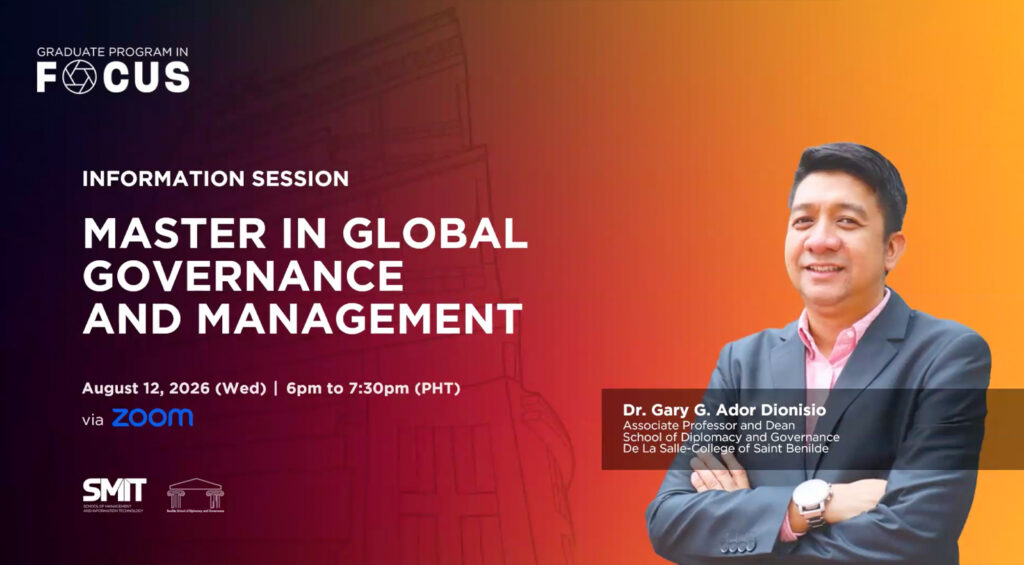
Dr. Gary Ador Dionisio, Dean of the School of Diplomacy and Governance, and Dr. Zosimo Membrebe Jr., program coordinator from the School of Management and Information Technology, led the discussion. Dionisio spearheaded the development of the program and its curriculum, working with SMIT to create a graduate degree that combines management, public administration, and diplomacy. Membrebe will oversee its implementation as program coordinator.
Dionisio described the environment that shaped the program as a “polycrisis,” where several crises happen at the same time and affect one another. Geopolitical tensions can disrupt supply chains and economies. Misinformation can affect public trust and decision-making. Artificial intelligence can quickly change how organizations operate. These developments create problems that often cross the boundaries of business, government, technology, and international relations.
“That is exactly where Benilde wants you to be,” Dionisio said in the session’s opening video, referring to the space where these different sectors meet.
He explained that the Master in Global Governance and Management grew from the need to understand these connections. The program combines three areas that usually exist separately: management, public administration and governance, and diplomacy and international relations.
“Imagine right now that you are a business executive, but you have knowledge in diplomacy and public administration. That will be your plus point,” Dionisio said. The same applies to professionals in government or diplomacy who need to understand how businesses operate and how economic interests shape international affairs.
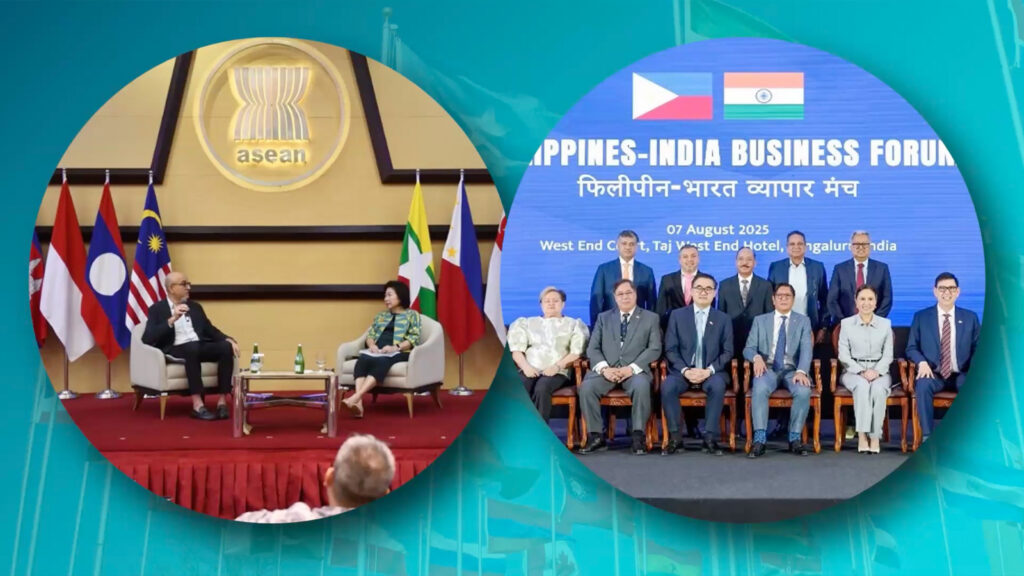
This approach also applies to issues such as regional cooperation. Dionisio cited Pax Silica as an example of an emerging issue that calls for knowledge across several fields. Agreements and international initiatives can have implications for businesses, governments, communities, and other organizations, so professionals need to understand how these interests interact as they prepare for changes that may take years to unfold.
The program develops this broader perspective through strategic and critical thinking, evidence-based analysis, negotiation and conflict management, risk-taking and decision-making, systems thinking, technological resilience, adaptability, and diplomatic skills. Students can use these competencies in government, business, development work, civil society, international organizations, and research.
Dionisio also emphasized the value of understanding global issues while staying grounded in local concerns. One of the program’s goals is to prepare leaders who can look at local and national issues through a global perspective. This becomes particularly relevant as organizations deal with challenges shaped by international economic relations, technological changes, sustainability goals, and regional cooperation.

The program also takes a practical approach to learning. Dionisio explained that the faculty designed the courses to connect theory, practice, and application. A diplomacy course, for example, can cover the concepts behind diplomacy while also teaching protocols, etiquette, and other skills used in actual diplomatic settings.
Membrebe then presented the program structure. The Master in Global Governance and Management follows a professional master’s track and requires a capstone project as its final requirement. The program consists of 33 units and can generally be completed in six trimesters. Highly motivated students may complete it in five terms, subject to the program’s approval.
Students whose undergraduate degrees do not have a background in business administration, diplomacy, or public administration may need to take bridging courses. These can include Foundations of Diplomacy and Governance, Business Statistics for Managers, and Financial Management, depending on the student’s previous coursework.
The curriculum draws courses from both participating schools. Subjects include Introduction to Global Governance and Diplomatic Skills and Protocol, as well as Change Management and Instructional Strategies in Government. Membrebe described the courses as current and closely connected to the needs of organizations and industries.
Technology also has a place in the program. Students will work with AI, data analytics, and e-government tools as part of developing their ability to make decisions in complex environments. Membrebe explained that data analytics goes beyond working with numbers. Students learn to use information to develop strategies and make better decisions.
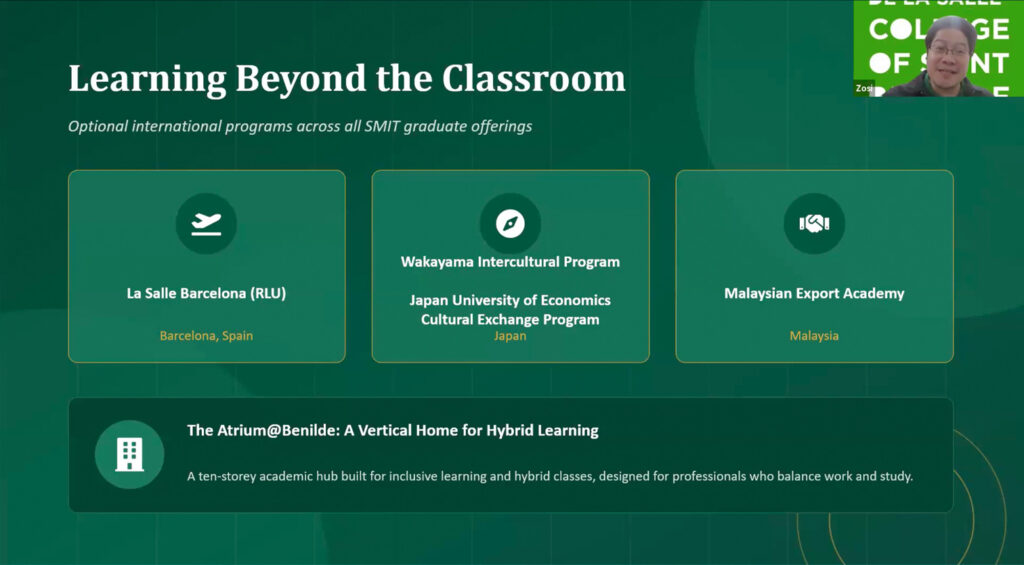
The program also connects students with international learning opportunities offered through Benilde’s graduate programs. Membrebe cited recent activities at La Salle Barcelona and Ramon Llull University, where students explored intercultural communication, transnational management, artificial intelligence, and business analytics. He also mentioned programs with Wakayama Global Business School, the Japan University of Economics, and the Malaysian Export Academy. Other international opportunities are being explored, including potential participation in the School of Diplomacy and Governance’s educational tour in Washington.
The discussion also addressed the needs of working professionals. Classes are primarily online, with a few in-person sessions. Weeknight classes generally run from 6 to 9 PM, while Saturday classes may run from 8 AM to 12 PM or take up a larger part of the day depending on the schedule. Students taking the online setup should expect to attend on site at least once per term.
During the Q&A, prospective students asked about the program’s practical value, career opportunities, class schedules, and its place among existing graduate degrees. Dionisio pointed to the program’s interdisciplinary design and its faculty, which includes practitioners and academics with experience in their respective fields.
The program can lead to roles such as policy analyst, planning officer, program manager, policy advisor, government relations manager, public affairs specialist, governance consultant, development program manager, advocacy officer, ASEAN affairs specialist, and policy researcher. Graduates may also pursue work with international and regional organizations, government agencies, corporations, development organizations, NGOs, and research institutions.
Applications also include an online interview instead of an entrance exam. Benilde offers several graduate school tuition grants, including grants for De La Salle Philippines affiliates, employees of partner organizations, Benilde associates, student referrals, and students who pay their tuition in full.
The Graduate in Focus session gave prospective students a look at how the Master in Global Governance and Management prepares professionals to work across the boundaries of management, governance, diplomacy, and development. As organizations face problems that increasingly connect local decisions with global developments, the program gives students a framework for understanding those connections and responding to them.
For more information on Benilde’s graduate programs, contact us at inquire.graduatestudies@benilde.edu.ph or fill out our inquiry form. You may also visit www.benilde.edu.ph.